
The Pet Insurance Australia Companion Animal Rescue Awards shines light on the rescue groups, animal shelters, and companion animal welfare organisations who continue to save thousands of animal lives during these challenging times of the Covid-19 era.
The Rescue Awards is Australia’s first and only national awards program that celebrates and recognises achievements in the rescue, rehabilitation and rehoming of companion animals. The for-purpose program is managed by Pets4Life, an independent education resource for cat and dog guardians and those thinking of getting a pet.
This year, Pet Insurance Australia is the Platinum Rescue Hero and Naming Partner.
“The Finalists have demonstrated not only excellence but also their resilience and ability to innovate in these difficult times to rescue and re-home pets,” said Cathy Beer, Rescue Awards founder and rescue advocate from Pets4Life.
Amongst the finalists are volunteers from our member organisations Lort Smith (VIC), Sydney Dogs and Cats Home (NSW) and Saving Animals From Euthanasia Inc (WA).
Trish Ennis, National Executive of CANA, said, “We are proud of our members and their volunteers for their achievements providing care and rehoming services for lost, abandoned, surrendered and mistreated animals. They work hard to support the thousands of Australians who live with a companion animal and make the world a better place for pets.”
Volunteer of the Year Finalists
Kaye Cromie has been a volunteer with Lort Smith for eight years, supporting the operations of the Adoption Centre, helping as a foster carer and sitting on their Volunteer Advisory Committee. As a foster carer, Kaye provides care to surrendered animals that need to remain in Lort Smith’s care for a longer period of time to allow for growth, development, rehabilitation or respite.
Melissa Penn’s involvement with the Sydney Dogs and Cats Home started over two decades ago before she adopted her first cat, Terry. Her long involvement with SDCH has allowed Melissa to generate trust and long-term relationships with management, members and volunteers within the organisation. In January 2020, she became Vice President.
Special Foster Carer Award
Charmane fosters dogs and puppies for SAFE Karratha WA with her family. Read about her special ‘foster failure’ dog, Kaylee, here.
For all the Finalists, visit the Rescue Awards website.
Photo credit Jo Lyons Photography
Minister for Agriculture Mary-Anne Thomas said 21 organisations would receive a Pet Desexing Grant under Round One of the $1.5 million program, including the City of Port Phillip and the Bendigo Animal Relief Centre. The grants could see more than 4,000 cats and 650 dogs desexed.
“These grants will ensure Victoria’s most vulnerable pet owners can access free or low-cost desexing and help limit the numbers of unwanted cats and dogs in shelters across the state,” said Ms Thomas. “The funding is an important step to support councils and not-for-profit organisations to provide critical desexing services and improve animal welfare outcomes for our much-loved pets.”
As part of the $500,000 offered in Round One, the City of Port Phillip has been awarded $47,521 to establish the Pets of Port Phillip Clinic, which will offer free desexing services for an estimated 225 cats and dogs owned by disadvantaged people living in public housing estates in the area.
City of Port Phillip Mayor Louise Crawford said, “This grant means we can assist more than 200 residents living in public housing by providing free desexing, vaccination and microchipping for their dogs and cats at the Pets of Port Phillip Clinic.”
A $15,725 grant will support the Bendigo Animal Relief Centre to deliver the Bendigo Community Cat Program which will desex, vaccinate, microchip and register 50 cats whose owners are low-income earners.
Bendigo Animal Rescue Centre Operations Manager Fra Atyeo said, “Through the Bendigo Community Cat Program we are aiming to provide an affordable service to residents that will increase the number of micro-chipped, desexed, and registered cats in the community.”
Pet Desexing Grants are funded through the Animal Welfare Fund Grants Program and will provide $1.5 million over three years to support councils and not-for-profit organisations that provide free or low-cost desexing of cats and dogs for disadvantaged members of our community.
Since the Animal Welfare Fund Grants Program was launched in 2012, 169 grants have been awarded to not-for profit and community organisations, totalling almost $4.2 million, to improve responsible animal ownership and provide better welfare services for companion animals in the community.
For more information on the program
A study by new Australian dog supplement brand ZamiPet finally uncovers an undeniable link between the health of our dogs and our own mental health, finding that when our furry friends aren’t feeling well, we feel out of sorts ourselves, and we want to help.
In research that polled 1,000 Australians, dog owners spoke of how they see their pets as family members and get great comfort from their presence in their lives. Almost all respondents said their dog makes them happier (95 per cent) and healthier (93 per cent), while 94 per cent said their dog supports their overall mental health.
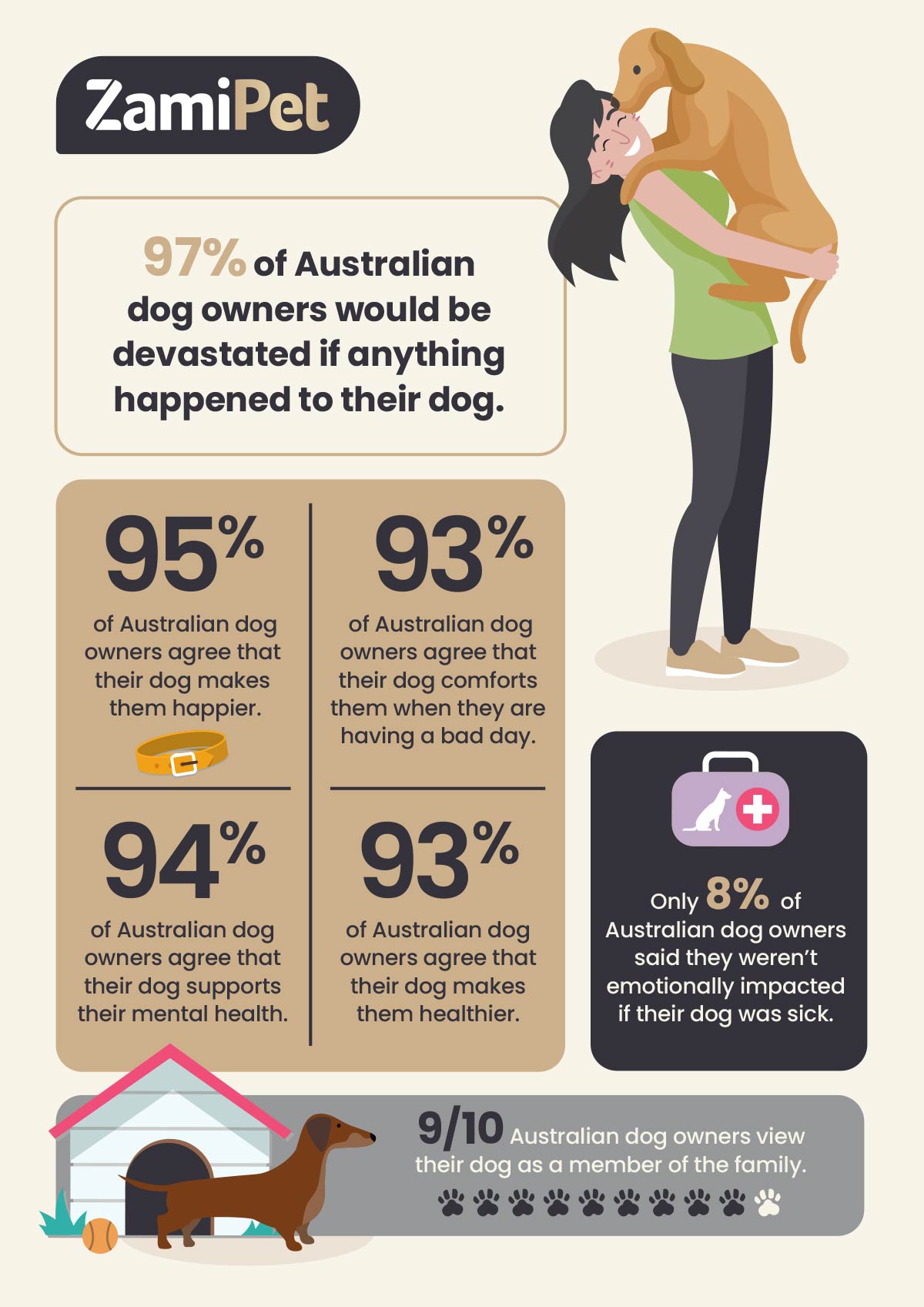
Nine out of 10 said they’d be devastated if anything happened to their dog, with the same amount of people also commenting that their heart breaks when their dog is unwell. Only eight per cent of people said they weren’t emotionally impacted if their dog was sick.
Dr Andrew McKay, Australian veterinary surgeon and head vet at ZamiPet, said there is no denying that happy pets meant happy humans, but that few pet owners understood the link between happiness and health when it came to their pets.
“Many of us have experienced the stress and upset of a sick or injured pet – it impacts our mood, our mental health and our happiness. This research confirms what pet lovers have always known – our health and happiness are heavily influenced by our pet’s own health and happiness,” he said.
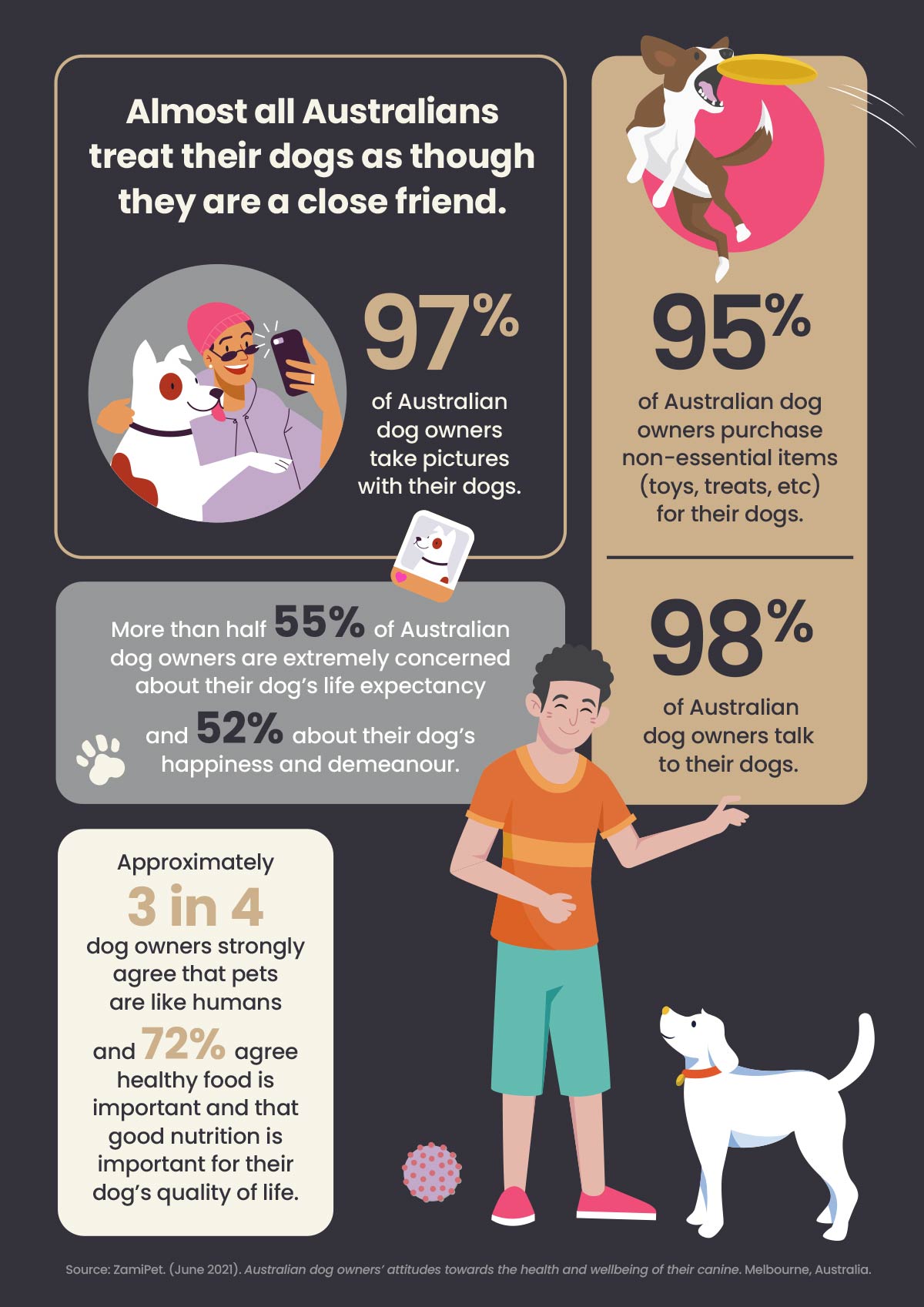
The ZamiPet study also delved into attitudes towards dog ownership, finding that 93 per cent of Australian dog owners view their pet as a member of their family and almost all treat their dogs as though they are a close friend. In fact, 98 per cent of Aussie dog owners talk to their dogs, 97 per cent take pictures with their dogs and 94 per cent purchase items like toys and treats for their dogs.
Australian dog owners have also used a video monitor to track the movement of their dogs when they’re not at home (79 per cent), celebrated their dog’s birthday (65 per cent) and more than half have purchased fashion accessories for their dog (53 per cent) – confirming the utter joy our much-loved companions add to our livelihoods and the unconditional love we have for our pets.
Credit: ZamiPet
In the past two weeks a small number of Lort Smith pet therapy dogs started visiting the hard working staff at the Peter MacCallum Cancer Centre.
Lort Smith Head of Hospital, Dr David Cunliffe said, “Staff at the Peter Mac, like so many other hospitals across Melbourne, are in need of support at this time. So, when a call came to Lort Smith from our friends at Peter Mac with concerns about the impact of the latest COVID-19 outbreak on their frontline healthcare workers, our pet therapy volunteers responded with a resounding “YES’’ to coming back to visit staff.
“We have a strong, positive partnership with Peter Mac staff, who see first-hand the incredible impact a dog’s presence can have on people experiencing acute distress, pain, and trauma. The staff go above and beyond to support our visiting volunteers and to provide the opportunity for people to benefit from the human-animal bond.”
Although the Lort Smith Pet Therapy program began over 32 years ago as part of the community outreach services, it was originally designed for patients and residents in hospitals, aged care and juvenile justice facilities.
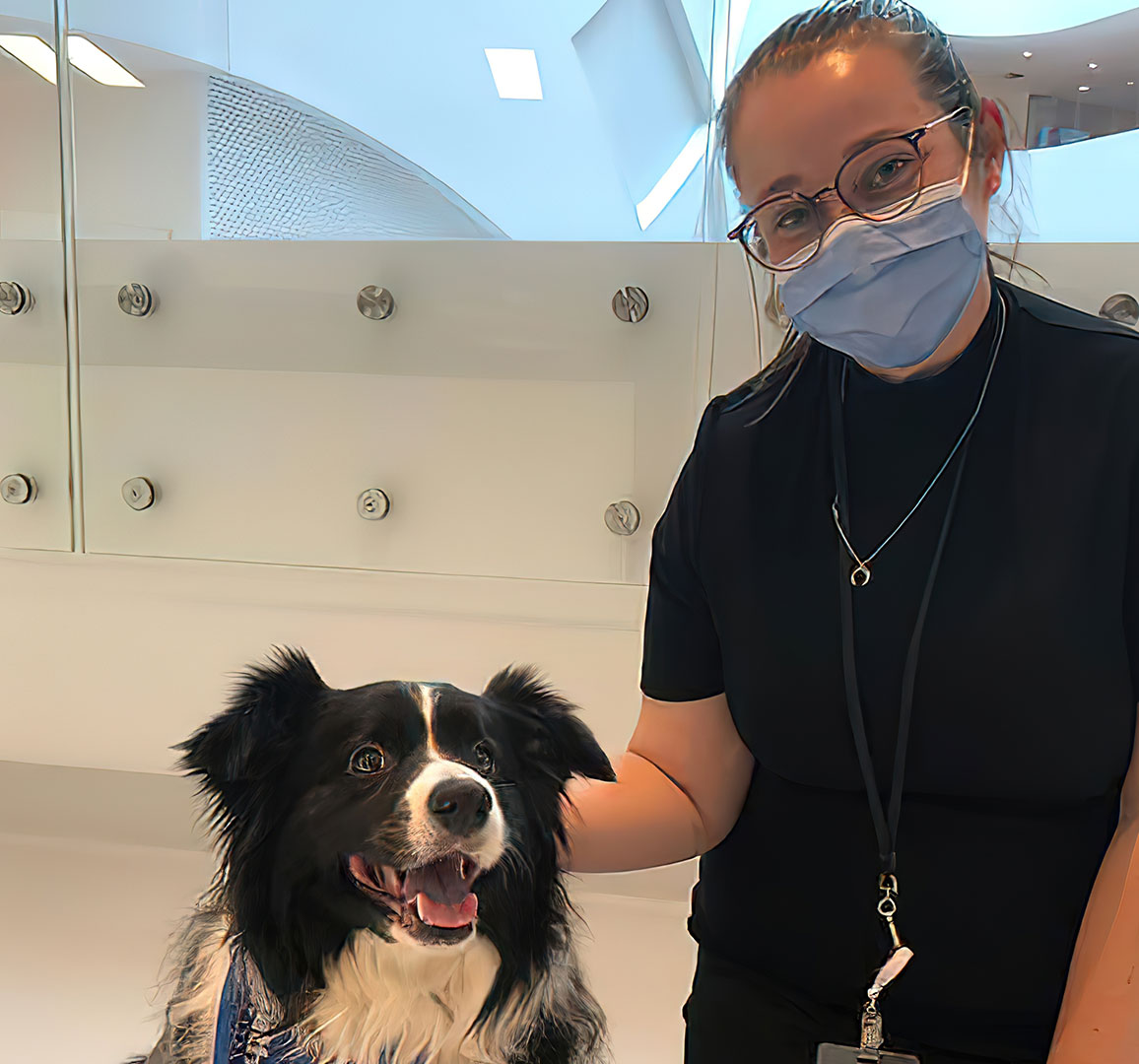
However, due to COVID-19, the volunteer pet therapy teams have been unable to visit the high-risk, vulnerable groups and instead there has been a strong interest for pet therapy services as a support for healthcare workers.
“In non-COVID times, these incredible dogs from Lort Smith are a common sight in our inpatient wards,” said Peter Mac’s Chief Nursing Officer, Jac Mathieson.
“They always bring a smile to the faces of our patients and their visitors, and of course our staff. A massive thank you to Lort Smith for everything you are doing to support wellbeing at Peter Mac.”
Pet therapy is used in defence and first responder industries being recognised as an established measure for helping employers manage workplace stress and support mental health and wellbeing.
Lort Smith is an iconic Melbourne institution serving the community for 85 years and is the busiest not for-profit animal hospital in Australia, seeing around 25,000 animals each year.
Animal health industry leader Animal Medicines Australia (AMA) has published a new study, Pets and the Pandemic, that sheds light on how the pandemic has changed our relationships with our pets and the people who help care for them.
As the report reveals pet ownership at record levels, the AMA urges policy makers to consider the needs of companion animals and their owners.
“This should range from rental, strata and body corporate regulations to animals in public places, transport access and holiday accommodation,” says Lance Williams, AMA President.
In the Pets and the Pandemic report, the research indicates the COVID-19 pandemic restrictions may have created an opportunity for Australians to introduce a previously desired pet into the family, rather than the pandemic being the reason itself for acquiring a pet. For instance, working from home arrangements have provided the opportunity to spend time with a young pet.
The research also reveals that the early anecdotal reports accurately reflect the biggest boom Australia has seen in pet ownership. In a time of significant uncertainty and reduced social interaction, Aussies have turned to pet ownership as a source of comfort and joy.
This report, a supplement to Animal Medicines Australia’s triennial report, includes overall pet population data as well as information specifically focused on cats and dogs based on a quantitative survey and qualitative research.
Owners said that pets had a positive impact on their lives throughout the pandemic because they provided joy, comfort and were good for mental health. The smaller number of negative experiences reported were associated with things like restricted walking times, worrying that their pet could catch COVID-19 or having their pet pass away.
The pandemic also showed that pet animal welfare must be explicitly protected as an essential service/activity.
“Our pets bring so much love and joy to our lives; it is our responsibility in turn to provide them with the best health, care and environment we possibly can,” says Mr Williams.
Download the full report here.
Due to open later this year, Lort Smith Animal Hospital – Campbellfield Centre will be the new community veterinary centre on Berwick Road, Campbellfield and will build on Lort Smith’s iconic legacy to provide animals with affordable, high-quality vet care to those in and around Melbourne’s north.
The Campbellfield Centre will include a vet clinic, improved adoption centre facilities and a community dog park. This second site at Campbellfield represents the growth of the organisation and demand for services across the community.
Building efforts will then focus on their existing site in North Melbourne where they will be staying with new and improved facilities, an expansion of their emergency and surgical services, and provision for more complex veterinary care.
The developments have been made possible thanks to the generosity of donors, bequestors and supporters who give to the organisation, supporting Lort Smith’s Capital Campaign.
To help Victorians take action against poor breeding practices during COVID-19, the community legal centre established the Anti-Puppy Farm Legal Clinic for free legal advice.
Erin Germantis, a lawyer with ALI, said throughout the pandemic many people have welcomed new companion animals such as dogs and cats into their home. With this rising demand for pets, breeders may increase their churn and charge exorbitant prices to make a quick profit. They may even do so even at the expense of an animal’s health, or the health of the animal’s offspring.
“Too often, people unknowingly bring home animals with underlying health conditions that the breeder did not disclose before the sale. The buyer is then left to foot the bill for veterinary treatment to help their pet recover,” she said.
Helping Victorians and their pets
The Anti-Puppy Farm Legal Clinic is providing free preliminary legal advice to Victorians who have purchased sick pets from breeders.
For example, people in this situation may have a legal right under the Australian Consumer Law to obtain a refund of their purchase price; reimbursement of past and/or future veterinary expenses; or an exchange of the animal.
Obtaining legal advice is the first step in understanding your rights, obligations and options under the law.
Book an appointment today to speak with a lawyer about your rights or to learn more about the clinic: www.ali.org.au/antipuppyfarmlegalclinic
The Animal Law Institute is a registered charity and community legal centre. If you would like to support their work, please visit www.givenow.com.au/ali
Photo credit: Erin Germantis on behalf of The Animal Law Institute
Founded in 2003, SAFE has saved more than 30,000 animals across the state, including every re-homable animal offered by the Karratha City's Ranger Services and the community. SAFE Karratha's veterinary charges alone for the last financial year were $95,000.
City of Karratha provides financial support with an annual lump sum contribution of $65,000. Due to the lack of funds there are only 2 paid positions across all 11 branches. SAFE's work is supported by volunteers, including its founder, Sue Hedley OAM.
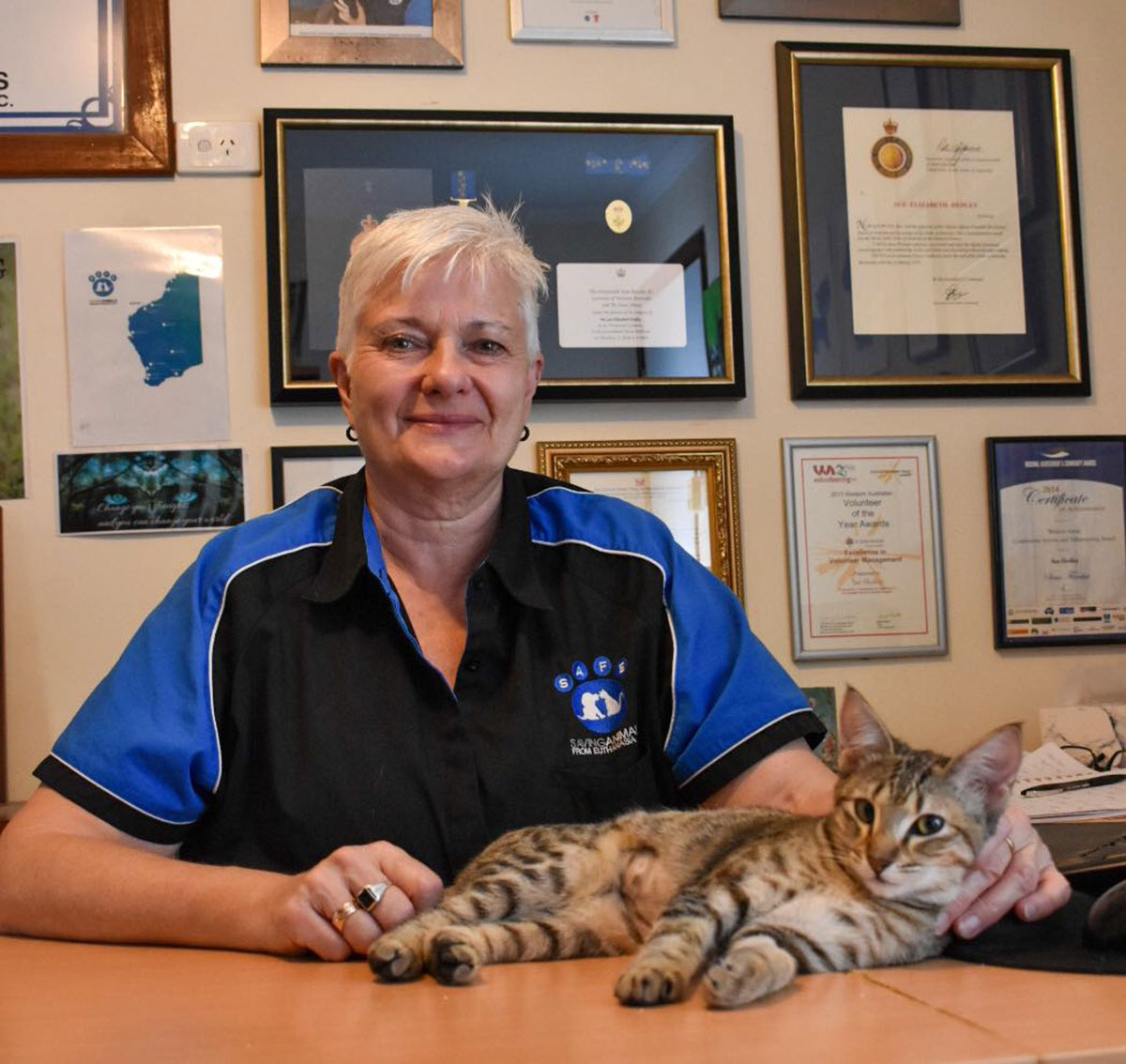
However, SAFE does not have anywhere near enough volunteers to help in the day-to-day operations and to ensure its sustainability, the charity needs the basic wage of one employee paid as a minimum, as well as a per animal contribution for those animals referred to SAFE from Council's Ranger Services in each Branch.
"If SAFE were no longer able to operate, the ramifications would be devastating, not only to the animals needing to be saved, but also to the entire community," explained Sue.
"Prior to SAFE's inception, homeless animals were frequently destroyed and disposed of by the Council. If we closed, vets and rangers would be having to euthanise healthy, re-homable animals, something that no one has had to cope with since SAFE's inception."
CANA applauds the move by Karratha Council to provide funding and service fees to SAFE Karratha to re-home animals.
"It is great Karratha City Council are supporting our vital work, however SAFE also operates out of Avon Valley, Broome, Bunbury, Busselton, Carnarvon, Esperance , Goldfields, Hedland, Metro- Perth and Newman where they receive no support from councils for doing the same work," said Trish Ennis, National Executive of CANA.
"We encourage other local governments to consider following the innovative and life saving ideas of City of Karratha."
Spending time with animals is a research-backed way to lower stress and anxiety. And yet, you don’t need to own a pet to reap the stress-reducing benefits. If pet adoption isn’t an option for you, you can still find comfort in visiting a friend’s pet, visiting the dog park on your lunch break, or taking a trip to a petting zoo over the weekend. There are three reasons why pets can help us cope with stress.
Desexing cats before four months old is on the increase. New research finds Australia is doing well in the desexing arena. But the age of desexing needs to be brought forward from six months to four months to close a "pregnancy gap" and prevent unwanted litters of kittens.